
High pressure system
An eerie winter draped in false promises and constant dread

Today’s accompanying tune: “I’ll Believe in Anything” by Wolf Parade
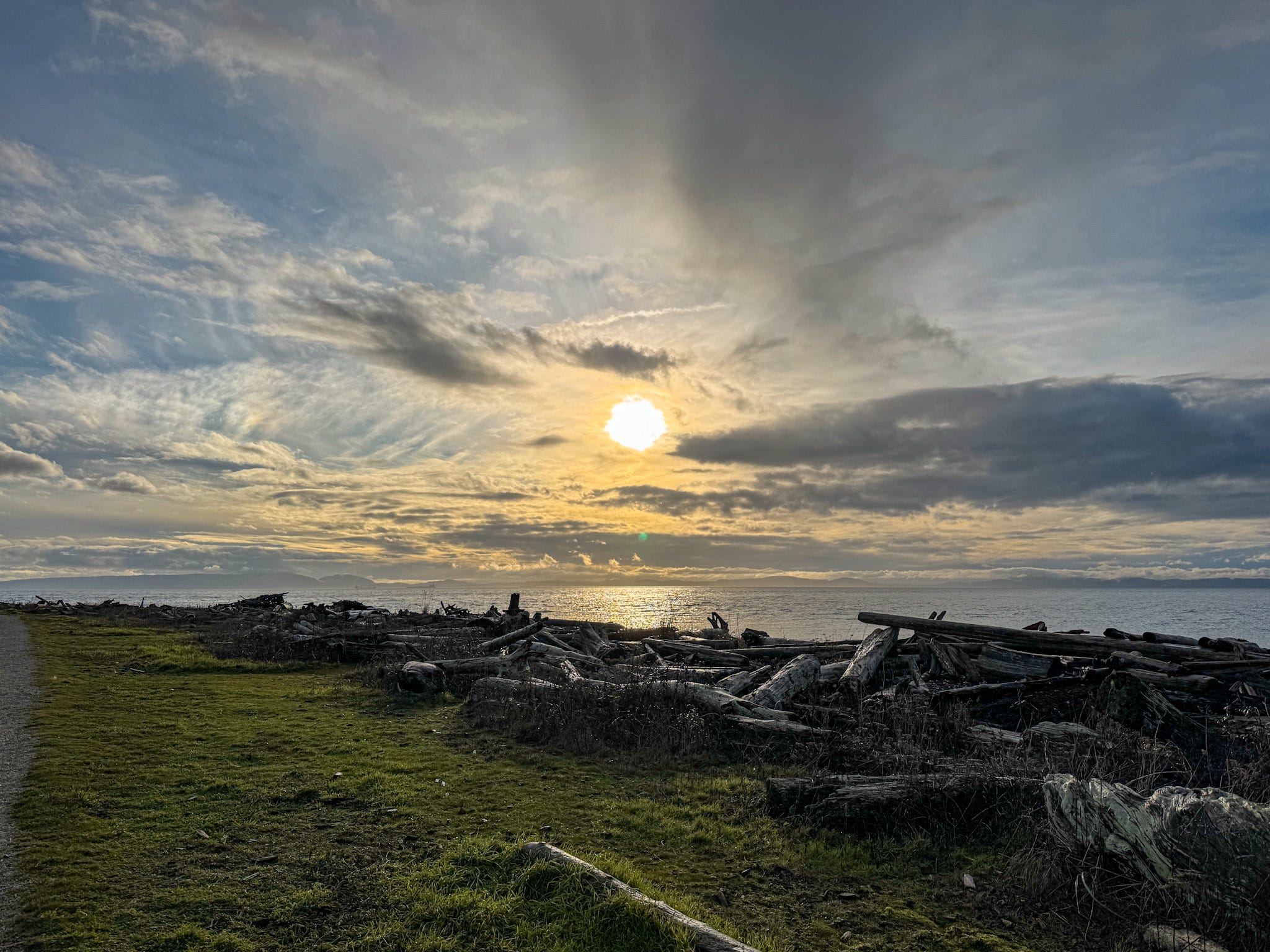
It can be tempting to try and swat away the buzz of dread, its incessant whining hovering close to my ear, drowning out the early morning chorus of birdsong. Birdsong that arrived too early, its makers unsure of where they should be headed, where they should be eating, if it is time to nest. The dread hovers nearby, its irritating drone both everywhere and nowhere, as the tender, soft buds poke their heads out of branches, eager to start their work as photosynthesis powerhouses.
The early markings of spring — the pure optimism of promise, life, and growth — is typically a cause for celebration. The light has returned, the clouds have parted, and the rain has somewhat ceased. The mercury rises, the sweaters go back into storage, and the remaining pieces of firewood linger in the shed. There is rejoicing in having made it through the dark, the damp, the cold. The long veil of winter has finally lifted and, in the returning light, we catch a glimpse of what’s to come.
But spring is arriving here in the Pacific Northwest in January. A month that should be marked by dullness, by the gray of low clouds and misty rain, has seen temperatures at or above 60 degrees Fahrenheit as the sun beams down from its southerly perch, warming the meager white blankets on the mountains ringing the valley. The rivers run high with melt, their typically blue hues washed out into shades of earth. The sky and the river have switched roles, the reflections mirrored from their usual posts this time of year. A gray sky, a blue river, nowhere to be found.
Snow hasn’t yet materialized here near the valley floor, an uncommon occurrence that likely will not be called as such in the years ahead. What used to be a regularity — a foot of snow here and there, a few times each winter — has been whisked away by the graying river, all hopes of a muffled world encased in white rushing away towards the ocean.
It can be tempting to ignore the dread hovering around. To remark that this year’s case of seasonal depression never quite materialized, to say that the sun and warmth are balms for those who cannot tolerate the damp and the cold. To bask in the ease of entertaining young children outdoors, at the playground, on bicycles, when they’d spent the past few winters catching one germ after another, holed up with hundreds of other children in museums and indoor play areas. To boast about never having to cover the pool, that it never reached temperatures low enough to cause a freeze. To throw the windows open and let the stale air float away; to stash the cumbersome jackets back into the closet. It can be so tempting, this ruse. This false promise of reprieve; the draw of an endless summer. But as someone who has lived it — has endured months on end of high temperatures, constant sunlight, enduring wildfires — I can tell you it is not the future those giving in are imagining. It is suffocating, so stifling that you cannot breathe. It is a future that only exists for the well-housed, for those with the ability to escape into temperature-controlled oases, leaving the rest of us out in the heat.
It has been a winter where the only ice I’ve seen is in the fascist goons roving the streets of cities across the country, including my own town. It is not lost on me that, in an eerie season already full of dread, the dystopian future has only done more to cement itself in reality, that the rise of authoritarianism is accelerating just as the effects of climate change are again making themselves known. A season warming rapidly as to be nearly unrecognizable in vast swaths of the country is outshone only by the increasingly violent, hot rhetoric coming from those wielding power, those who want us to give in to the temptation. To see only how lucky we are, to not notice the deviations from our previously shared norms, to pretend it is a one-time exception instead of another step in a long-term trend. It is so tempting to close our eyes, to ignore where this feels like it’s going, to take the false promises at face value. To see the buds, to hear the birdsong, and think only of how nice it feels right now, in the dead of winter, to see these signs of life. Not to think about what that means for this summer, for the trees unable to produce fruit or seeds after the buds inevitably fail, given their premature emergence. Not to think about the disruption of migration patterns to birds and the ecosystems that rely on their returning, year after year, for survival.
Those whose interest is in cashing in, in closing the door to their comfortable quarters and locking out the rest, prefer it this way, prefer working with less competition for what they recognize as finite resources. They are all in on short-term gains, on shareholder value measured in quarters instead of years. Attempting to make an egalitarian, habitable world governed by the will of the people, is in direct defiance of those whose only goal is lining pockets, of saving themselves. They, too, can hear the dread buzzing nearby, maybe louder than some others. That is why they pull every lever, tap every button, to make it so that they alone will thrive in the unpredictable, unstable future into which we are strutting. How easy it must be, to convince the masses to do the hard work for them, to convince them what they see is a mirage, what they feel is not real. The false promises they are making appeal to some, can feel like an easy decision to make when life has become so hard for so many. To stay quiet, to do nothing, is such an easy proposition.
But, as many people who have lived it can attest, it will not save you. It will not protect you, shield you, shelter you. The trees budding too early will only survive if their neighbors are able to hold firm, are able to hold out, are able to hold up to the increasingly hostile environments that they cannot flee. The networks of roots and fungi can do all they can to shuttle nutrients among trees that are lacking come summer, come drought, so that the forest may survive as best it can. The more species rooted in the forest, the more likely it is to survive drought, to withstand wildfires. The better matriarch trees can alert younger saplings to dangers such as invasive beetles or viruses, so that they may all shore up their defenses. They do not accept the false promises, do not swat away the nagging sound of dread filling the air around them. They exhale into it, dispersing it as best they can the only way they know how, the only way they’ve ever done. They continue living, continue existing. They cannot shrink, cannot hide. They must stand and endure, raise their branches towards the sky and come what may. It won’t be easy, and many may suffer. The summer will come and drain our reserves, evaporate our resources. The leaves will crisp and fall when it becomes too much too soon. Fruit will fail to materialize, and blooms will go unpollinated. It didn’t have to be this way, didn’t have to be so cruel. It is the fight of our lives to stand tall, to tap into our networks and bring down that which threatens us all. To acknowledge the dread, to acknowledge the reality we’ve found ourselves in. And then, to breathe out. To exhale. To fight.
Here’s to opening our eyes, to knowing what we feel, and not shrinking from reality.
- Megan
I discovered you when you were in the desert where I’ve lived for over 50 years. I’m happy to be reading you again. I fled to Washington last summer seeking escape from the increasing desert heat, only to discover no refuge, not really. And all through this (not surprisingly) mild hi desert winter people have been smiling and saying, “can you believe this beautiful weather we’re having?” And I feel like I’m the only one not enjoying a “perfect” day. And I long for snow (not even in the mountains). Anyway, thank you for your stellar writing. Your words resonate.
The forest metaphor here is incredibly powerful - drawing parallels between trees standing together through climate stress and humans needing collective action cuts deeper than most climate writing. I've been watching the same thing unfold in the Bay Area, where January feels like April and everyone acts like its just a nice bonus instead of a warning sign. The observation about buds emerging too early only to fail later perfectly captures how these unseasonable gifts are actually setting us up for worse outcomes. Also the connection between authoritarianism and climate change accelerating together isnt talked about enough - both thrive on people accepting false promises and ignoring that constant dread.